Jake Drewes had a pretty normal childhood, going to school, doing his homework, and hanging out with friends. But once a year, a research team would visit Drewes and his brother to put them through a series of tests.
“When I was younger, it was mainly cognition, like testing our reading skills or memorization. And then when we got older, there was one where they had an electrode cap on me,” he recalls.
In his teenage years, the research team also tracked his and his brother’s social media usage for six months with each brother’s consent, and even had them do cognition tests while in an MRI machine.
“They had us laying there, and had this cage over our head with a mirror so we could see a monitor in the back of the tube so we could do some kind of memory test while they were scanning our brain,” he laughs.
While all those tests might sound like something out of a Hollywood movie, they are actually quite common; Drewes and his brother are twins, and the kinds of studies they participated in investigate whether individual differences are more explained by a person’s genetics or social environment––a question of the importance of nature versus nurture.
“I always enjoyed it,” Drewes recalls, “And when it came time to thinking about what I wanted to do with my life, my first choice was wanting to do twin study kind of stuff.”
While his own experience as a research subject got him interested in science, his interest in what kind of science he wanted to morphed as he moved through high school and college, becoming interested in neuroscience next, and then biology. By the time he was finishing his bachelor’s degree at University of Colorado, Boulder, he was doing research on viruses.
Now, Drewes researches the interactions between bacteria in biocrust, or bacterial communities that live on top of dryland soils. Specifically, he looks at what chemicals certain bacteria send out to signal that they want something from other bacteria in their biocrust community, almost like asking a friend for food. Beyond just studying what signals they’re sending each other, he also investigates how those signals change depending on the environment the bacteria are in and different bacteria’s ability to turn food into energy.
In working to better understand how all those bacteria work together to form biocrust, he hopes his research can help replace the biocrust that is rapidly being lost across the world’s drylands due to habitat degradation.
“The eventual goal is biocrust restoration,” Drewes explains, “It can take a really long time for biocrust to develop––sometimes decades. And in the meantime, all that dust is being blown around in dust storms and haboobs, making those storms more severe.”
And while Drewes’s curiosity took him far beyond his original interest in twin studies, he feels that the interdisciplinary nature of his work suits him.
“I really like that my research is microbial science, but also ecology. I have like hands in all these different fields,” he says. “When ASU accepted me, I’ve really gotten to see how collaborative and innovative this kind of research is. I’ve been very happy working and staying here.”
Note: This story is part of an ongoing series profiling graduate students in the School of Life Sciences. See October's featured students here.
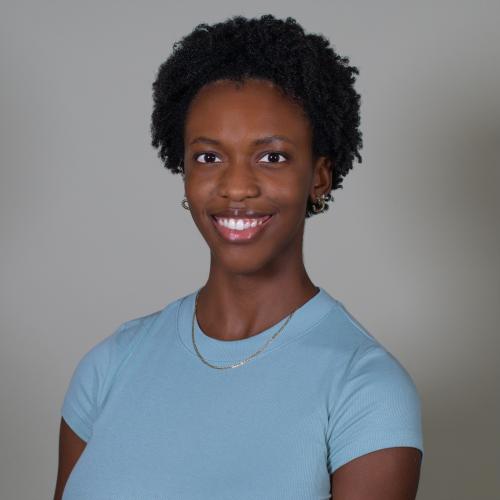
Eboni Elaine Andersun – Biology and Society PhD, History and Philosophy of Science
When Eboni Andersun was a kid, she dreamed of being a doctor. She drew pictures of all the patients she’d save one day and spent hours obsessively writing “Dr. Andersun” in cursive on her papers.
“I was a precocious child,” she laughs.
Throughout her undergraduate degree at ASU, she stayed interested in human health but realized that being a doctor might not be the right path for her: “I didn’t only want to be able to serve people who could see me at my facility, who had the right insurance. I wanted to serve populations.”
Image
Eboni Elaine Andersun
This especially became clear to Andersun when she took a class on HIV with Damien Salamone, who teaches both the microbiology of the virus, as well as the historical and social impacts, like how HIV disproportionately impacts People of Color. After that, Andersun enrolled in another course where she wrote articles on the history of herpes and gonorrhea for the Embryo Project Encyclopedia. That work made it extra clear how not only HIV, but most sexually transmitted infections, are highly stigmatized and misunderstood to the point where many people don’t know about available preventions and treatments for these overwhelmingly common infections. Black women compared to women of other races are especially susceptible to contracting STIs like HIV, gonorrhea, chlamydia, and others.
“As a Black woman myself, I’m a part of this very vulnerable population. I couldn’t imagine all the women that look like me, that sound me like me, that speak like me, that come from the same place as me, not having the knowledge that I do and being especially vulnerable to these STIs that are preventable, that are treatable, that are sometimes curable. I knew I wanted to fix it.”
Andersun’s work doing research with the Embryo Project opened doors for her to continue onto her PhD at ASU. She was awarded an Enrichment Fellowship from the School of Life Sciences in her first year, which gave her the freedom to prepare for her dissertation without working as a TA. She spent much of that year working with the ForkHPV! project, which organized a multidisciplinary group of 86 Barrett Honors students to study HPV from different angles and culminated in a university-wide vaccination event.
Andersun plans to use her PhD to design research-based interventions around preventing or treating STIs for Women of Color in Phoenix. She hasn’t decided which STI she’ll focus on yet, but she knows she wants her project to prioritize the knowledge of local communities in hopes of actually reducing the disparities of disease occurrence. She hopes this will lead her to a career of designing research-based interventions that have real world outcomes with organizations like the Centers for Disease Control or the National Institutes of Health.
“I want to reduce disparities, and help heal the relationship between researchers and communities, members of the public that have historically been exploited by research, and people that have not benefitted from research in the past. That’s my goal.”
Andersun surely has an exciting career ahead. But in many ways, even getting to the point of doing a PhD is a dream come true.
“I’m the first person in my family to even get a bachelor’s degree, so it’s so surreal to be getting a PhD... I’m pursuing my doctor dreams, just in a different way.”
Andersun also emphasizes the role her mother Elaine played in her journey, who passed away before Andersun finished her bachelor’s. “I know all of this is due to my mother. She’s who I work for, and I see her in every woman I want to serve.”
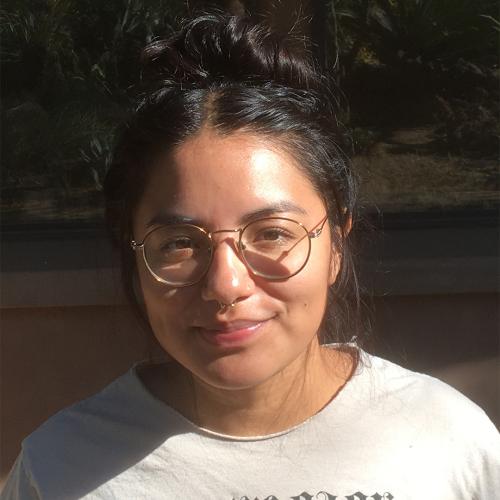
Susan Albor –– Microbiology PhD
Susan Albor spends many of her days at the Desert Botanical Garden, tending to her propagated cottonwood trees that she’s collected from various sites around Arizona. While she’s interested in learning about the cottonwood trees, she’s more interested in the soil they grow in, and the many microbes that live there. In her PhD, she hopes to understand how different soil microbes help cottonwood trees adapt to environmental stressors, especially extreme heat.
“A lot of people have focused on the relationship between mycorrhizal fungi and plants. Cottonwoods are one of those plants that have important mycorrhizal associations. But there’s been less of an emphasis on other microbes in the soil. I’m hoping to fill that gap.”
Image
Susan Albor
Albor didn’t start out with a specific passion for soil microbiology; she could’ve been happy with almost any ecological work. Like many biologists, Albor learned to love nature through her childhood experiences outdoors. She became curious about the land that she got to know through family hikes and camping trips in the Midwestern US, but she was also influenced by land that she never got to know: the land that her parents and grandparents called home.
“I would hear my family talk about their experiences in Mexico, and what it looked like there. Interacting with nature was just part of their everyday experience. And I think I had this longing to know nature the way they did.”
Albor especially grew attentive to plants through her family: “I think that’s another cultural thing, you know? Your aunts and your mom are always exchanging plants and talking about them and getting really excited when someone has a rare plant. I think that just really increased my appreciation for them.”
When Albor started her undergraduate degree at the University of Illinois, Chicago, she enrolled as a double major in biology and environmental sciences, dreaming of doing environmental research. She knew to get to that career she’d have to start getting research experience. Unpaid internships weren’t an option for her, though; to pay for school, she was always working on the side. But one day, the perfect job came along: a student worker position in the university greenhouse.
“It felt like my dream job. And like a step in the right direction, like something that would get me to where I needed to be.”
With the connections she made at the greenhouse, Albor got deeper into biology research. She spent the next summer working at the University’s experimental plot of native tallgrass prairie, researching the relationship between monarchs and milkweed. The year after that, she got accepted into the National Science Foundation’s Research Experiences for Undergraduates program doing soil microbiology research. That experience made her not only curious about plants, but about the soil they grew in.
Albor was awarded a Graduate Research Fellowship from the National Science Foundation, one of the most prestigious graduate student research fellowships, to pursue her PhD at ASU studying soil microbiology. It’s been a winding road so far, as she’s been looking for the right spaces and people to work with to do the research she wants. She’s landed somewhere interdisciplinary, designing her own experiments to try and bring soil microbiology and botany together –– a route that not every PhD student takes, which can be both exciting and frightening.
Albor speaks more candidly than most about the uncertainties that come with doing a PhD. She’s honest about not being sure what the path ahead is. Even so, one thing is clear: she’s already an environmental researcher. Every day that she works with her soil samples and propagated cottonwoods, she learns more about the land she lives on and the many species –– visible and invisible –– that she shares it with, which is what she’s been working for all along.